Earnest Money Calculator
Earnest money is usually 1 to 3 percent of the purchase price. On a $400,000 home that is $4,000 to $12,000, held in escrow and credited toward the buyer’s down payment and closing costs at closing. Competitive markets can push deposits higher; local custom sets the norm.
Updated 2026. Researched guidance, not legal, tax or financial advice.
Earnest Money Recommendations
Recommended Earnest Money Range
Minimum
0
0%
Recommended
$0
0%
Strong Offer
$0
0%
Factors Considered
- Market conditions factor
- Property type consideration
- Financing type adjustment
- Regional standards applied
Important Reminders
- • Earnest money is typically held in escrow
- • Becomes part of down payment at closing
- • May be forfeited if buyer defaults (check contract)
- • Higher amounts show seller you're serious
Earnest Money Tips
- • In hot markets, 2-3% earnest money is common
- • Cash offers often include higher earnest money
- • Always use a reputable escrow company
- • Verify earnest money terms in the contract
- • Consider contingencies that protect earnest money
Regional Standards
Standard Markets
1-2% typical
High-Cost Areas
2-3% common
Competitive Markets
3-5% for strong offers
Cash Offers
Often 5%+ to show strength
Earnest money by price
Typical deposits at 1, 2 and 3 percent. Check local custom with your broker, since some markets use flat amounts.
| Purchase price | 1% | 2% | 3% |
|---|---|---|---|
| $200,000 | $2,000 | $4,000 | $6,000 |
| $300,000 | $3,000 | $6,000 | $9,000 |
| $400,000 | $4,000 | $8,000 | $12,000 |
| $500,000 | $5,000 | $10,000 | $15,000 |
| $750,000 | $7,500 | $15,000 | $22,500 |
Next, estimate the rest of the cash to close with the closing cost estimator.
Frequently asked questions
How much earnest money should a buyer put down?
Most buyers deposit 1 to 3 percent of the purchase price, so $3,000 to $9,000 on a $300,000 home. In a multiple-offer situation a larger deposit signals commitment and can strengthen an offer. The amount is negotiable and is written into the purchase contract along with the deadline to deliver it.
Who holds the earnest money?
A neutral third party, usually the title company, escrow company or the listing brokerage’s trust account, as named in the contract. The money sits there until closing, when it is credited to the buyer, or until the parties agree in writing how to release it if the deal falls through.
Do you get earnest money back if the deal falls through?
Usually, if the buyer cancels under a contingency in the contract, such as inspection, financing or appraisal, within its deadline. A buyer who backs out for a reason the contract does not allow, or after a contingency has expired, can lose the deposit to the seller. Read the contingency dates closely.
Sources: Consumer Financial Protection Bureau guidance on earnest money and closing, and standard state purchase contract terms. Researched guidance, not legal advice.
 Master Lock Portable Key Lock Box
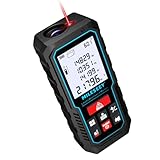 MILESEEY Laser Measure, 229 ft
 STYLIO Padfolio Portfolio Binder